
This is not a list of directories. It is the test we apply to any directory before submitting to it, and you can apply it yourself to any directory you are unsure about. Four questions, run in order, that sort the ones worth your time from the ones that waste it. Published lists go stale within months; a test does not. The fourth question, about what a free listing actually publishes, is the one almost nobody checks before committing hours of manual entry.
Key Takeaways
| The question | The answer |
|---|---|
| Should I work from a published list of citation sites? | As a starting set, yes. As the decision, no. Lists are accurate the week they go up and drift after that. Run your own test over whatever the list gives you. |
| What are the four questions? | Does the directory have a named category for this trade, does it serve this city, would a real customer land on it, and what does a free listing actually publish once you log out and look. |
| Which question do people skip? | The fourth. Some directories accept the data entry and then hide the address, phone and website behind a paywall. That is advertising, and it looks identical to a citation from the submitter’s side. |
| How do I check whether real people use a directory? | Private browser, search the directory name plus a category plus a city, and see whether its pages come back for phrases a customer would type. Not proof, but it separates active sites from dormant ones. |
| Are niche directories better than general ones? | Neither, in the abstract. A niche directory passes on category fit and often fails on audience size. A general one can pass on audience and fail because its category tree is too broad to file the trade properly. |
| What should I do before submitting anywhere? | Claim or create one listing, log out, and look at the public page. Whatever a stranger sees is what the listing is. Do that first, on every candidate, before committing any manual entry. |
How We Judge a Directory

There is a conflict of interest here worth naming. We sell citation work, so of course we would tell you selection is hard. The argument we can defend is structural: a test beats a list because a list ages and a test does not.
The Four-Question Test
A directory earns a place only if it passes all four of these:
- Does it serve the business’s industry, with a named category rather than a catch-all?
- Does it serve the business’s city, either through a subdomain, a filtered search, or a local page?
- Would a real customer land on it, either through search or direct visit?
- What does a free listing actually publish, once you claim it and inspect the result?
Question four catches the paid-only visibility trap. Some directories accept free data entry then hide the address, phone, and website behind a paywall. That is advertising spend, not a citation.
Why Lists Go Stale
Directories close. They change ownership. They stop accepting new submissions. A published list is accurate the week it goes up and drifts from that point on. The four-question test is evergreen because you apply it fresh to whatever candidates are in front of you today.
If a starting set is what you want rather than a method, we keep one: the directories worth listing on, grouped by what each is for. Run the four questions over them anyway, because the answers change by trade and by city.
Takeaway: Test the directory in front of you against four questions. Do not trust a fixed list to still be right.
Quick Summary
The categories below are the ones the four-question test sorts candidates into. If a directory falls into an “excluded” bucket, no amount of domain metrics saves it.
The Directories Worth Your Time
- General directories with documented activity. They pass questions one through three for most industries and cities. Yelp, Apple Maps, Bing Places, and Facebook are examples of directories that publish full listing content on a free tier.
- Niche directories aligned to the business type. These pass question one strongly, and pass question three when a category audience actually uses them.
- City-specific directories aligned to the metro area. These pass question two when the business operates in that city, and question three when local residents recognize the source.
What Gets Excluded and Why
- Paid-only basic listings. The business name sits behind a subscription gate a casual searcher never reaches. That is media, not a citation.
- Sites with no review section. No feedback channel and no reason for a customer to return to the page. Fails question three in practice.
- Duplicate aggregator networks. The same feed populates dozens of co-branded pages, so the same business appears many times with different review counts and address variants across the set. That is inconsistency built in by design.
- Dead or inactive sites. No matter what the domain scored years ago, if the site has not been updated in a year, it fails question three.
- Directories that publish only the business name on the free tier. Fails question four immediately.
Takeaway: Four inclusions, five exclusions. Paid basic listings belong in the ad budget, not in citation packages.
Applying the Four-Question Test

Run these in order. Fail at any step, skip the directory.
Question One: Industry Fit
The directory’s category tree must include the business type as a named category. A plumber listed under “Home Services (Other)” is filed where nobody browses. If the closest available category is a generic bucket, the industry fit is weak and question one fails.
Check the category page itself. Does it have listings already? Does the search box return results when you type the trade name?
Question Two: City Fit
City fit means one of three structures: a city-specific subdomain, a city landing page, or a search that filters to a metro area without manual work from the searcher. Directories that dump every listing into a national feed with no local filter fail this question, even if they claim national coverage.
For businesses operating across a wider footprint, a broader local SEO approach may reach directories that treat service-area coverage differently from a single storefront.
Question Three: Real Customer Traffic
You cannot see a directory’s analytics, but you can approximate. Open a private browser window. Search the directory name plus the business category plus the city. Check whether the directory page ranks on the first page of results for phrases a customer would actually type. If it never appears, real customers are not landing there.
Question Four: What the Free Listing Actually Publishes
Create or claim a listing. Log out. Visit the published page as a stranger would. Check whether the address, phone, website, and hours are all visible, or whether the page shows “Upgrade to display contact info” in place of the phone number.
Google’s guidance on business profile information states that “businesses with complete and accurate info are more likely to show up in local search results”, and that if the info is inaccurate the profile “might not show up for relevant searches in your area”. That is the standard for a Google Business Profile. Treat it as a floor for what a directory listing needs to contain before it is worth maintaining at all.
Takeaway: The test is sequential. Question four is the one that filters out advertising posing as citations.
A Worked Example: Bexley Roofing
Bexley Roofing is a composite example, not a real client, and the figures in it are invented for the illustration. Only the method is real. It is a single-location roofing company, used here to walk through the four-question test end to end.
Applying the Test Directory by Directory
Bexley had submitted to twelve directories over about eighteen months, sourced from three different published lists. The audit ran each entry through questions one to four in order. Time on the audit portion came to around ninety minutes.
What the Audit Found
- Three of the twelve published only a business name on the free tier. Address, phone, and website were visible only to logged-in users on a premium plan. Those three were reclassified as paid advertising placements and removed from the citation set.
- Two directories in the set turned out to be part of the same aggregator network. The same data feed populated both, meaning correcting the address on one did not update the other. The correction had to go through the aggregator itself, and duplicate listing cleanup was the largest single time cost in the job.
- Four passed all four questions cleanly. Data was resubmitted with matching name, address, and phone across the set.
- Three failed question one: the roofer was filed under generic home services with no named roofing category.
Total active work across the audit, corrections, and fresh submissions ran to roughly four hours.
The One That Did Not Resolve
One submission ticket remained open after the rest of the work was closed. The aggregator acknowledged the correction request and issued a case number. The old address was still live on the published page a week later with no confirmed timeline for the update. That is an honest reminder that some corrections stay pending indefinitely, and the person ordering the work should know that going in.
Takeaway: Twelve submissions, four kept, four hours of work, one ticket still open. That is the shape of a normal audit.
What to Look For in a Local Directory
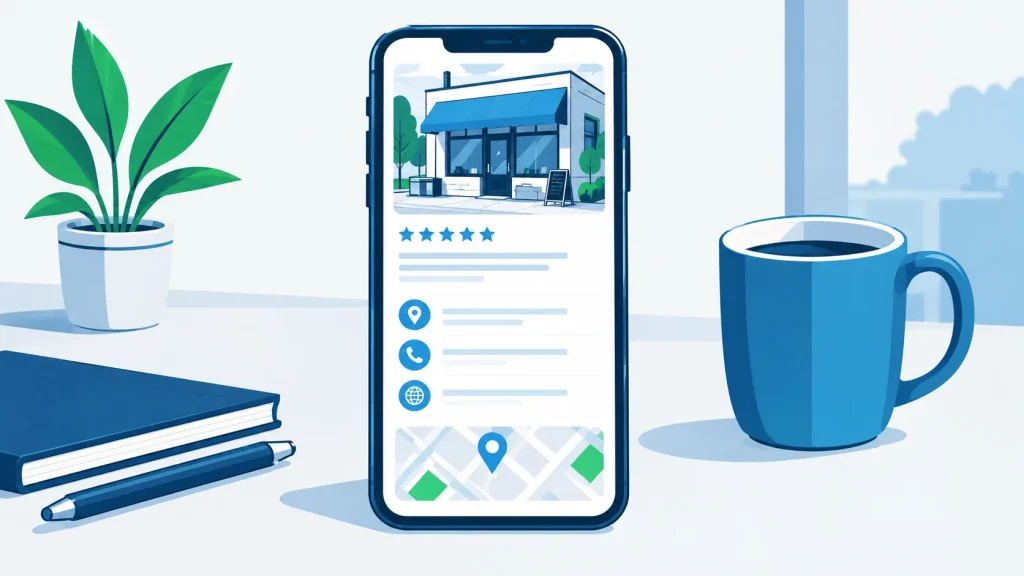
The four questions are the filter. The traits below are what the directories that pass tend to share.
Active Listings and a Working Search Function
A working search bar that returns results. A populated category tree. Listings updated within the past year. If the newest review on a category page is three years old, the directory is dormant regardless of what the domain used to be.
Transparent Free-Tier Content
The free tier should display business name, full address, phone number, and a website link without a login and without an upgrade prompt for the searcher. If the address is masked until the visitor buys a plan, no citation exists. The same discipline that protects a well-run Google Business Profile applies here: what a stranger sees on the public page is what counts.
Review and Update Mechanisms
A directory that offers no way for a business to update its own listing data is a liability. When the address or phone changes, the old data persists with no correction path. Look for a claim flow, a support address, or an update form before submitting.
A review section matters for a different reason. It gives customers a reason to visit the page and gives the business a feedback channel. A directory without one reduces the listing to a static data record.
Paid basic listings are worth naming separately. They are advertising placements: the business pays for visibility rather than earning a published record. They belong in a paid media budget. Grouping them with citations makes the citation set look larger than it is and hides how much of the spend is actually media.
Takeaway: Active, transparent, updateable. Miss any of those, and the listing is either advertising or a data grave.
Conclusion
The four-question test produces a shorter, more defensible list than any published ranking, because it filters for the specific business, the specific city, and the specific customer type. Directories that fail question four waste the most time: they accept the data entry, look like citations from the outside, and publish nothing a stranger would actually see.
The step most businesses skip is checking the listing content after submission. Do it at the start, on every candidate, before you commit any manual entry. The directories that pass for one trade are not the ones that pass for another, which is why the list for roofers looks different from the list for a dental practice.
Frequently Asked Questions
How do I know if a directory has real human traffic?
Open a private browser, search the directory name plus a business category plus a city, and see whether the directory page appears on the first page of results. If it never surfaces on searches a customer would run, treat it as low activity.

What is the difference between a citation and a paid directory listing?
A citation is a published record of business name, address, and phone visible to any visitor on a free page. A paid directory listing is advertising: the visibility depends on the subscription, not on the record existing.
Why does my business appear on directories I never submitted to?
Data aggregators syndicate business information across networks of co-branded sites. A single feed can populate dozens of directory pages simultaneously, which is why unfamiliar listings appear and why correcting one copy often leaves the others unchanged.
How do I fix wrong information on a directory I cannot log into?
Look for a support address, an update form, or a “claim this listing” button on the page itself. If none of those exist, the directory has no correction path, and that is itself a reason to stop treating the page as a citation.
Are industry-specific directories better than general ones?
Neither is better in the abstract. An industry directory passes question one strongly but often fails question three because its audience is small. A general directory with active users can pass three but fail one if the category tree is too broad.
What should a free listing actually show before I count it as a citation?
Business name, full street address, phone number, website link, and category, all visible to a logged-out visitor. If any of those are hidden behind an upgrade prompt on the public page, the listing is not functioning as a citation.
How often should I check whether my directory listings are still live and accurate?
Re-check when the business changes address, phone, hours, or name, and when a new location opens. Otherwise a periodic spot-check of the top directories once or twice a year catches most drift. Order the audit again when something material changes.
Sources
Google Business Profile Help, “Improve your local ranking on Google”, at support.google.com/business/answer/7091. Used for the single quoted statement about complete and accurate information, and for nothing else. Checked 7 September 2026.
No other external source is cited. The directory names in this article are examples of platforms that publish full listing content on a free tier, drawn from our own submission work rather than from a published ranking of directories.
The figures inside the worked example are invented for the illustration and are labeled as such where they appear.
How This Guide Was Made
Local Citation Services sells citation building and cleanup, so there is a commercial interest behind this guide. That is stated in the section on how we judge a directory and it is worth stating again here.
The test described is the one we use internally. It is published rather than kept back because a business that applies it will order less work, not more: three of the twelve directories in the worked example were removed from the citation set rather than corrected.
The guide describes what the work involves and what a business can check for itself. It does not say what any of it produces in search results, because that is not something we can verify, and the one statement on that subject is quoted from Google’s own documentation and linked.

Founder, Local Citation Services and Local SEO Expert
Sharif has built local citations by hand since 2009, across 24,000+ orders and 50+ countries. He leads the team that submits every listing manually, checks what already exists before adding anything, and reports back with a live URL and a login for each one. He writes about what the work actually involves, what goes wrong, and what a business owner can check for themselves without buying a tool.