
Finding the right places to list your business online is one of the first practical steps in local marketing. Local Citation Services reviews the directories that matter and helps businesses get listed accurately across them. This guide covers the directories worth your time, explains what each one is best suited for, and names at least one that was considered and left off the list, with the reason why.
How We Selected These Directories
The list below is grouped by what each directory is for, not ranked in a countdown. That grouping matters because a legal directory and a map platform do different jobs, and comparing them by “authority” alone hides the difference.
What Was Included and Why
Every directory below meets three plain tests. It has a defined audience or geographic focus. It lets a business display its name, address, phone number, and at least one additional field such as hours or a website URL. And it is used by real people looking for real businesses, not only by crawlers.
Directories were sorted into three buckets: general consumer, industry-specific, and map-based or location-data platforms. The bucket describes the job the listing does. A restaurant needs a Google Business Profile and a Yelp page for different reasons.
What Was Left Out
AboutMe and similar personal-profile platforms were considered and rejected. They index individuals rather than business entities, so they cannot hold a standard NAP record cleanly, and they are not what buyers search when they want a plumber or a dental clinic. A separate group of mid-2000s web directories built purely to sell links, with no real consumer audience, was also cut for the same underlying reason: no readers, no reason to submit.
Takeaway: A directory earns a place on the list by having a real audience and holding a clean NAP record, not by being old or large.
Quick Summary of Directories Covered
- Google Business Profile: best for map and local search presence.
- Apple Maps: best for iPhone and Siri users.
- Bing Places: best for Bing and Microsoft users.
- Yelp: best for consumer reviews in food, home services, and retail.
- Facebook Business Pages: best for social discovery and community engagement.
- Better Business Bureau: best for trust and accreditation display.
- Chamber of Commerce directories: best for civic and community referrals.
- Foursquare: best for location data that feeds dozens of downstream platforms.
- Nextdoor: best for neighborhood-level reach in home services and local retail.
- Industry-specific directories: best for niche audiences in legal, medical, and home services.
A structured local citation building job usually covers the general consumer, trust, and mapping platforms directly, then adds the industry directories that fit the business type.
General Consumer Directories
These four are the general-audience listings almost every local business should complete first. All accept free basic submissions; enhanced or promoted placement is a paid option on most platforms.
Google Business Profile
Google Business Profile is free and lets a business display its name, address, phone, hours, photos, and customer reviews directly in Google Search and Google Maps. Google’s own guidance states that “businesses with complete and accurate info are more likely to show up in local search results” and that if the info is not accurate the profile “might not show up for relevant searches in your area” (Google Business Profile help).
For a walk-through of profile completion and category choice, see the Google Business Profile boost service.
Apple Maps
Apple Maps Connect accepts business submissions at no cost. It is the primary source for the business data shown to iPhone and iPad users through Siri and the Maps app, which is a large slice of mobile local search that never touches Google.
Bing Places
Bing Places for Business mirrors the Google Business Profile structure closely: name, address, phone, hours, categories, photos. Listings populate results on Bing Search, Bing Maps, and Microsoft assistant products.
Yelp
Yelp displays consumer reviews, business hours, photos, and service categories. It is particularly prominent in the food, home services, beauty, and retail verticals, and its reviews are surfaced by other apps and voice assistants as well.
Takeaway: Complete all four before touching anything niche. They are the base layer other platforms often read from.
Trust and Accreditation Directories

Some listings are less about discovery and more about what a buyer sees when they check a business before hiring.
Better Business Bureau
The Better Business Bureau (BBB) displays a business profile, customer reviews, complaint history, and an A-through-F rating. A basic listing without accreditation is free and publicly searchable; accreditation is a paid tier that adds the BBB seal to the profile. Many consumers check the complaint resolution history before committing to a service business, especially in home services and finance.
Chamber of Commerce Directories
Local Chamber of Commerce member directories are run independently by each chamber. They typically list member businesses by category with contact details and a link to the business website. The audience is civic and local, and referrals from these pages tend to be community-minded buyers who found the business by browsing member categories rather than searching. Watch for the membership requirement: unlike the other directories here, a chamber listing is only available to paying members, and the annual fee varies by chamber.
Takeaway: Accreditation and chamber listings are proof pages. Treat them as places a buyer verifies you, not places they discover you.
Location Data and Mapping Platforms

This group is where inconsistent data usually starts, because each platform pulls information from different feeds.
Foursquare
Foursquare maintains a location database that other apps pull from, including Uber, X (formerly Twitter), and Snapchat. A single accurate listing on Foursquare can populate dozens of downstream sources, which is also why an outdated Foursquare record is stubborn: the wrong address can appear in apps you never signed up for.
Facebook Business Pages
Facebook Business Pages act as a hybrid social and directory listing. A completed page shows hours, contact details, a map pin, and customer reviews, all searchable within Facebook itself. For businesses with a strong local following, the page doubles as a community touchpoint.
Nextdoor
Nextdoor lets a business create a free Business Page visible to residents in the neighborhoods it serves. It fits home services, local retail, and restaurants especially well because the audience is defined by address. Watch for the address requirement: the reach of the page is tied to the neighborhoods around the address on file, which makes it a poor fit for a business serving a wide area from one location.
Because these three platforms source information differently, a business that updates its Google Business Profile may still show an old address on Foursquare months later. A round of citation cleanup is the practical way to reconcile them after an address, phone, or hours change.
Takeaway: Location-data platforms are one-to-many. Fix Foursquare and Facebook once, correctly, or the wrong data will surface in apps you did not choose.
Industry-Specific Directories Worth Knowing
Vertical directories tend to attract buyers further along in the decision than general directory browsers. Completing the full profile on the right one is worth the extra steps.
Legal and Medical Directories
Legal professionals are commonly listed on Avvo, FindLaw, and Justia. Medical providers appear on Healthgrades, Zocdoc, and Vitals, each of which displays credentials, patient reviews, and accepted insurance. Both sets ask for more detail than a general directory does, so the profile takes longer to complete.
Home Services Directories
Home services businesses are frequently listed on Angi (formerly Angie’s List), Houzz, and HomeAdvisor. Angi and HomeAdvisor charge for leads or membership tiers, while Houzz offers a free basic profile that pairs well with a portfolio of project photos.
Hospitality and Travel Directories
Hospitality businesses benefit from listings on TripAdvisor and Booking.com. Both display reviews, photos, and booking links, and both are used by travelers researching options before they arrive. Watch for the commercial terms: Booking.com takes a commission on reservations made through it, so the listing is a sales channel with a cost attached rather than a free directory entry.
A directory built purely for link purposes, with no real reader base, was again considered and rejected here. Naming rejections matters: the goal is a list of places a customer might actually see you, not a submission checklist for its own sake.
Takeaway: Pick the two or three vertical directories your buyers already read. Complete the full profile on those before touching a fourth.
What to Look for Before Submitting to Any Directory
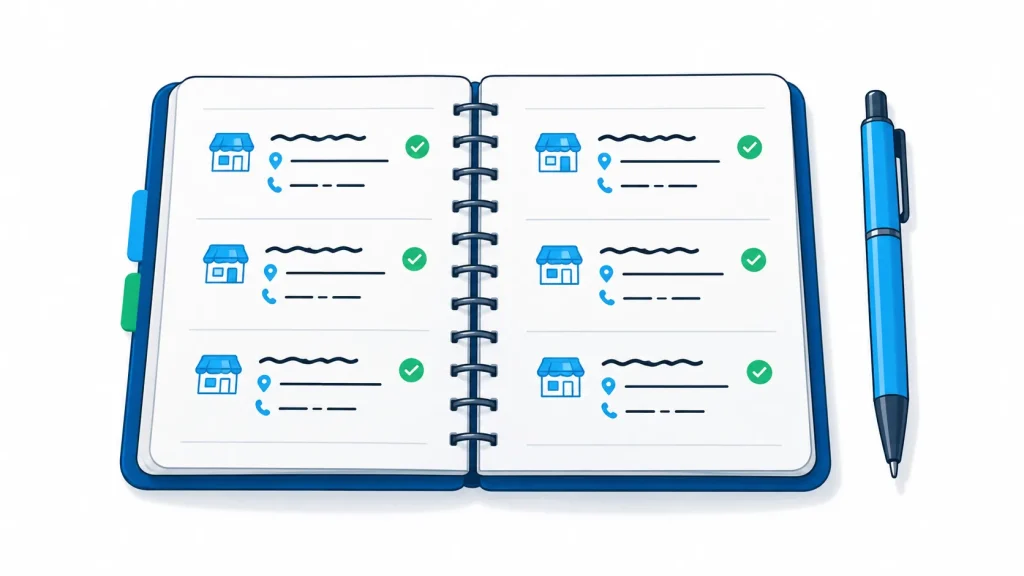
The mechanics matter as much as the choice of directory. A well-chosen listing filled out inconsistently still creates work for you later.
Profile Completeness Checklist
A complete listing typically includes:
- Business name, exactly as it appears on the storefront and legal registration
- Street address, with the same suite format every time
- Phone number, in the same format across platforms
- Website URL
- Business hours, including holiday variants where the platform supports them
- Category or service type, chosen from the platform’s own list
- At least one photo of the storefront, team, or product
Name, address, and phone must be formatted consistently across every directory. “Ste 4” on one platform and “#4” on another is a discrepancy that confuses both users and automated data aggregators.
Keeping Listings Accurate Over Time
When a business moves, changes its phone number, or updates its hours, each directory must be updated separately. Most platforms do not sync with each other automatically, and the location-data feeds behind apps like Foursquare update on their own schedule. Re-checking and correcting listings after a change is a discrete job the owner orders when needed, not a service that runs in the background. For the wider picture of how citations, profiles, and reviews fit together, the local SEO overview walks through it in order.
Takeaway: Format NAP once, in writing, before you submit anywhere. Every future correction is easier when you have a canonical version to copy.
Frequently Asked Questions
Which online directories are the most important for a local business?
Google Business Profile, Apple Maps, Bing Places, Yelp, and Facebook cover most general search and map surfaces. Add two or three industry directories that match your sector, such as Healthgrades for a clinic or Houzz for a remodeler.
Is it free to list my business in online directories?
Basic listings on the major consumer and map directories are free, including Google Business Profile, Apple Maps, Bing Places, Yelp, Facebook, and Foursquare. Paid tiers exist for promoted placement, BBB accreditation, and lead purchases on Angi or HomeAdvisor.
What happens if my business has duplicate listings on the same directory?
A duplicate means the same business appears twice, often with different review counts, addresses, or phone numbers on each version. Most platforms provide a merge or removal request, and clearing duplicates prevents customers from landing on the wrong record.
How many directories should I list my business in?
For most local businesses, a well-completed presence on the five general directories plus two or three vertical ones is enough. Beyond that, submissions to niche or geographic directories help only when their audience matches your buyers.
Do I need to update directories separately if my address changes?
Yes. Most directories do not sync with each other, and location-data platforms like Foursquare feed downstream apps on their own schedule. Update each platform directly, or order a one-time correction round covering the full list.
Are industry-specific directories worth the time compared to general ones?
Yes, when the directory has a real reader base in your sector. A completed profile on Avvo, Healthgrades, or Houzz reaches buyers already deciding between providers, which is usually a shorter path to contact than a general search result.
Wrapping Up
The short version: complete the five general directories first, add the trust and mapping platforms next, and finish with the two or three vertical directories your buyers already use. Name your NAP format once and copy it exactly every time. When something changes, treat cleanup as a scheduled task, not a background one. Sector-specific submission lists vary enough by trade that the directories worth your time in one industry are rarely the same as another.

Founder, Local Citation Services and Local SEO Expert
Sharif has built local citations by hand since 2009, across 24,000+ orders and 50+ countries. He leads the team that submits every listing manually, checks what already exists before adding anything, and reports back with a live URL and a login for each one. He writes about what the work actually involves, what goes wrong, and what a business owner can check for themselves without buying a tool.