
Local business listings are online directory entries that display your business name, address, phone number, and other key details across platforms like Google, Yelp, and Apple Maps. For plumbers, contractors, clinics, and other local service businesses, these listings are where your business details are published. Local Citation Services handles local citation submissions by hand and corrects the entries already published.
Definition: What Is a Local Business Listing?
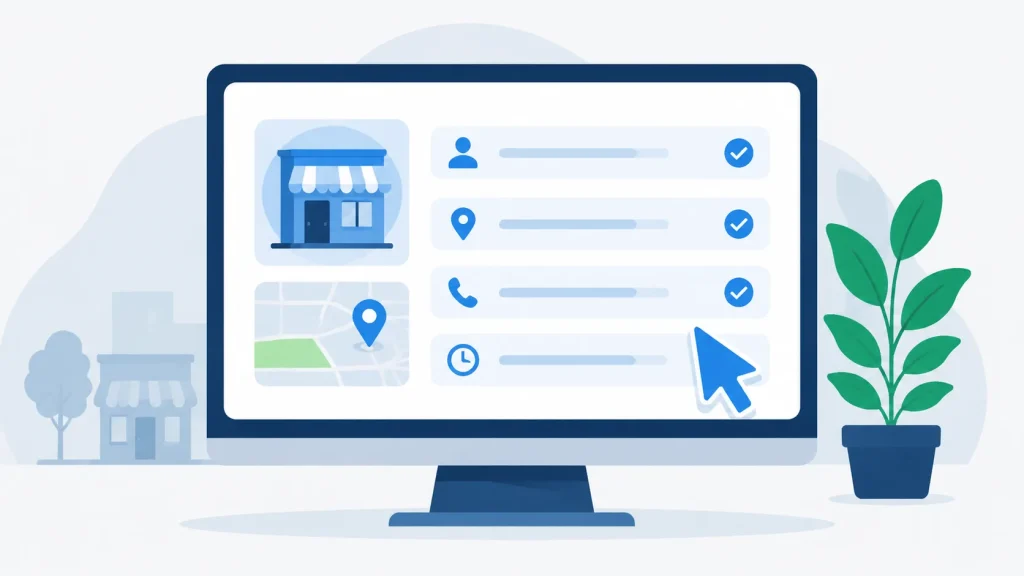
A local business listing is a profile on a directory or data platform that publishes your business information to the public web. The profile usually includes your business name, address, phone number (collectively known as NAP), website URL, hours of operation, and a primary category. Listings live on general platforms like Google Business Profile, Yelp, and Apple Maps, on niche directories like Houzz for contractors or Healthgrades for clinics, and on data aggregators that push information downstream to dozens of smaller sites.
In plain English: A local business listing is a public record of your business on someone else’s website, and each accurate copy makes it easier for search engines and customers to confirm you exist.
The Core Components of a Listing
Every complete listing carries the same core fields: business name exactly as it appears on your signage, street address (or service area for mobile businesses), a local phone number, website URL, category, and hours. Photos, a business description, and services offered fill out the profile. An incomplete profile is simply a profile with blank fields, which is why a thorough local citations submission pass fills every optional field the directory allows.
How Listings Differ from a Business Website
A business website is a property you own; a listing is a profile on someone else’s property. A directory page is its own result, so someone searching for the business may land on the Yelp entry or the Google Business Profile rather than on your site. Practitioners often use the term “local citation” interchangeably with “local business listing” to mean any online mention of your NAP.
How Local Business Listings Work

Data Aggregators and Where Listings Come From
A handful of data aggregators, including Data Axle, Neustar Localeze, and Foursquare, distribute business information to hundreds of downstream directories. A single accurate submission to an aggregator can propagate widely; a single inaccurate one can pollute dozens of sites at once. This is why businesses that use a managed local citation building process start with the aggregators before touching smaller sites.
How Search Engines Use Listing Data
Google’s guidance on local ranking states that “businesses with complete and accurate info are more likely to show up in local search results”, and that if the information is not accurate the profile “might not show up for relevant searches in your area”. The same three fields appear on every directory, so the versions can be compared against each other. Some directories also carry their own visitors, since people browse them directly to shortlist service providers, and a targeted local SEO plan counts both traffic sources.
Takeaway: One accurate record submitted to the right aggregator can seed dozens of downstream listings, while one bad record can do the opposite.
Why Local Business Listings Matter for SEO
Citation Consistency and Local Rankings
A listing set that agrees with itself is one where every directory carries the same three fields. Cleaning up mismatches through a dedicated citation cleanup pass is often the first fix a struggling local business needs.
Links Back to Your Website
Directory listings often carry a link back to your website. Some are followed, some are nofollow. Either way they are links from another domain to yours, and they sit alongside whatever work is being done on the site itself.
Visibility in Local Pack Results
The “local pack” is the map-based block of three results at the top of a Google search. It is populated from Google Business Profile data. Optimizing the profile itself, including categories, services, and photos, is a distinct workstream that services like a Google Business Profile boost focus on. Business listing data is published in a form software reads, which is one reason it is worth checking that the published version is correct.
Key Directories Every Local Service Business Should Be Listed On
Universal Directories
Google Business Profile is the profile Google renders in Search and Maps, so what you put in it is what appears there. After Google, the tier-one general directories are Apple Maps (via Apple Business Connect), Yelp, Bing Places, and Facebook. Each carries its own visitors and its own submission process. Most submission work starts with this group before moving further out.
Niche and Industry-Specific Directories
Industry-specific directories list businesses by trade, so the entries around yours are competitors rather than every kind of business in the area. Home-service contractors benefit from Houzz and HomeAdvisor; healthcare providers from Healthgrades and Zocdoc; legal professionals from Avvo. Choosing directories deliberately means fewer entries, each on a site where the business belongs.
Takeaway: Which directories you choose matters as much as how many. Ten entries on directories that serve your trade take less upkeep than a hundred on sites that do not.
Common Mistakes That Undermine Local Business Listings
NAP Inconsistency
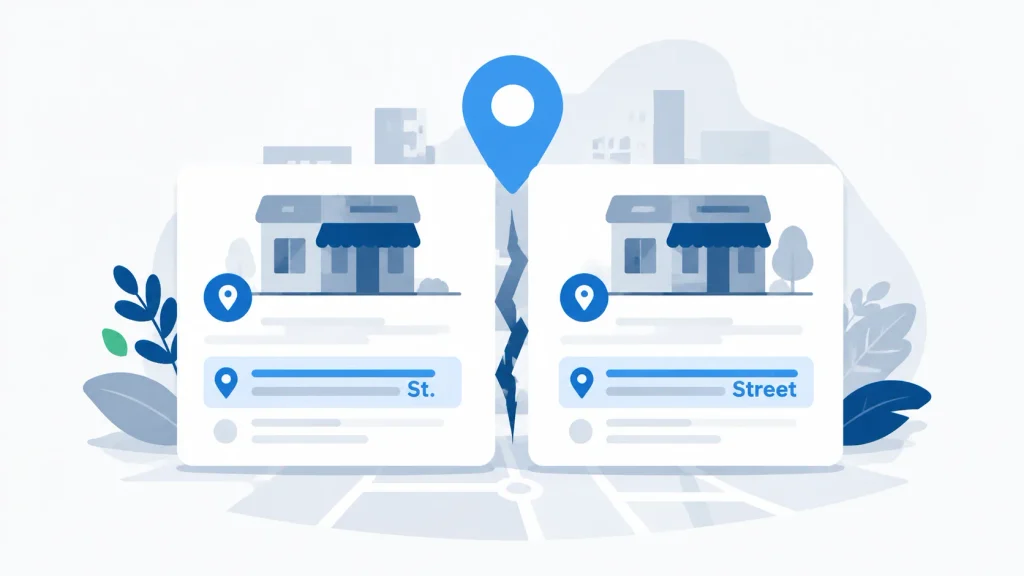
NAP inconsistency is the most common error in a listing set. It is rarely a wrong number; more often it is “St.” on one directory and “Street” on another, or a suite number present in one place and absent in another. A structured audit catches those formatting differences.
Duplicate Listings
A duplicate means the same business appears twice on one directory, with different review counts and often different details on each. Google’s own guidelines recommend reporting or merging duplicates through the Business Profile dashboard. When duplicates exist across many directories, a systematic citation cleanup run is usually faster than removing them one by one.
Incomplete Profiles
An incomplete profile is one with blank fields where a searcher expects information. Missing hours, no photos, and an empty business description are the most common gaps. Using a virtual office address or a PO box as your primary address also violates Google Business Profile guidelines and can result in suspension. Listing on irrelevant directories creates entries on sites that have nothing to do with the business, which is why each submission target is worth checking by hand before anything is sent.
How to Build and Correct Local Business Listings
Getting Started: Priority Platforms First
Start by claiming and fully completing your Google Business Profile. Then move to the tier-one directories (Yelp, Apple Maps, Bing Places, Facebook) before expanding to niche platforms. Maintain a master NAP document with the exact business name, address, and phone number formatting used across all listings.
Re-checking Listings After Something Changes
When business information changes, the listings carrying the old version do not update themselves. Outdated information stays published until someone corrects it, and aggregators can re-populate old data downstream after a manual fix. That makes a re-check worth ordering at the points where something actually changed: a move, a new phone number, a rebrand, or a stretch of time since anyone last looked. It is a job with a start and an end, not a service that runs in the background.
Takeaway: Build in a priority order (Google first, tier-one directories next, niche last) and audit against a master NAP document at least twice a year.
Frequently Asked Questions
What is the difference between a local business listing and a local citation?
The terms are used interchangeably by most SEO practitioners. A citation is technically any online mention of your NAP, while a listing is a structured profile on a directory. Every listing is a citation, but not every citation is a full listing.
How many directories should my local business be listed on?
There is no fixed number, and the useful answer is a type rather than a count. Google Business Profile, the general directories people actually use, and the ones that serve your trade and your area. Which directories you choose matters as much as how many.
Are local business listings free?
Most major directories, including Google Business Profile, Yelp, Apple Maps, Bing Places, and Facebook, offer free listings. Some niche and premium directories charge for enhanced placement or verification. Managed citation building services charge for the submission work, not for the listings themselves.
How do local business listings affect my Google ranking?
A wrong listing is a wrong record published under your name. Whether anything else follows from it is not something anyone outside Google can tell you.
What is NAP, and why does consistency matter for listings?
NAP stands for Name, Address, and Phone number. Consistency means every directory carries the same version of those three fields, down to the punctuation.
What happens if my business has duplicate listings on Google?
Duplicate Google Business Profiles mean reviews land on two separate entries rather than one. Google recommends reporting duplicates through the Business Profile dashboard so they can be merged or removed. Left unaddressed, both entries stay live and a searcher may land on either one.
How long does it take for a new listing to appear in local search results?
Timelines vary by directory. Google Business Profile can appear within days once verified, while data-aggregator submissions may take several weeks to propagate to downstream sites. Plan for a four to twelve week window for a full citation build to stabilize.
Bringing It Together
Local business listings are the public record of your business across the web, and they matter for SEO because directory data is published in a form software reads. The work is not glamorous, and it is checkable: pick the right directories, keep NAP data consistent, fix duplicates, and re-read the record when something changes. When the submission workload gets too large to handle in-house, it can be ordered as a job: the submissions and the cleanup done once, with a report back showing where each entry went live.

Founder, Local Citation Services and Local SEO Expert
Sharif has built local citations by hand since 2009, across 24,000+ orders and 50+ countries. He leads the team that submits every listing manually, checks what already exists before adding anything, and reports back with a live URL and a login for each one. He writes about what the work actually involves, what goes wrong, and what a business owner can check for themselves without buying a tool.