
Google released a spam update on 18 August 2026 and confirmed it finished rolling out on 21 August. It applied globally and to all languages. Google named no specific policies, published no accompanying blog post, and declined to say what share of searches were affected. This page covers what was actually announced, the parts of Google’s spam rules that mention cities, regions and directories by name, and what a local business owner can reasonably check.
What Google Announced
The official record is short. Google’s Search Status Dashboard logs the update as beginning at 09:27 Pacific on 18 August and ending at 01:49 Pacific on 21 August, a rollout of two days and sixteen hours. The dashboard notes the release of the August 2026 spam update and states that it “applies globally and to all languages”, followed three days later by a note confirming completion.
That is all of it. Two timestamps and a scope statement.
Three things Google did not do
The absences are as informative as the announcement, and each is verifiable by looking:
- No blog post accompanied either the release note or the completion note.
- No specific spam policy was named, at launch or at completion.
- No figure was given for how many searches were affected.
This was the third spam update Google announced in 2026, after ones in March and June. The cadence is worth knowing, because it makes this a routine event rather than an emergency.
Takeaway: Google published two timestamps and a scope line. Everything more detailed than that, including this page, is interpretation.
A Timing Trap Worth Knowing About

Search results moved noticeably in the first half of August, well before 18 August. Those movements were not this update. Google’s John Mueller said directly that the rollout had not quietly started days earlier, and Google publishes named updates close to when they actually begin.
Separately, Search Console had a reporting fault in the days immediately before the rollout, where some impressions were logged short and later restored. That fault sat inside the window most people would use as their “before” comparison.
Both matter for the same reason. If your traffic looked odd on 12 August, an update that started on 18 August cannot explain it. And if your “before” numbers came from a period when reporting was broken, the comparison itself is unreliable.
Takeaway: Establish when your decline actually started before naming a cause. Treat 1 to 17 August, 18 to 21 August, and 22 August onward as three separate windows.
What This Means If You Run a Local Business

Spam updates enforce policies that already exist. Google did not say which ones this update touched, so the honest approach is to read the rulebook and see which parts could ever apply to a local business at all.
Three of them mention cities, regions or directories by name, and they are the three worth knowing.
Location pages
Google’s doorway abuse policy gives, as one of its examples, having multiple domains or pages aimed at particular regions or cities that funnel visitors to a single page (Google’s spam policies).
Read that carefully, because it is narrower than the panic version. Having a page for each town you serve is not the problem. The example describes pages built to capture separate searches that then push everyone to the same place. If your Louisville page and your Jeffersonville page are the same page with the town swapped, and both funnel to one contact form, that is the shape being described. If each page carries genuinely different information about working in that area, it is not.
Lists of towns
Google’s keyword stuffing policy lists, among its examples, blocks of text naming the cities and regions a page wants to rank for.
This is the footer or sidebar full of place names that a lot of service-area businesses were told to add at some point. It has been in the policy for years. Whether this particular update touched it, nobody outside Google knows, but it is an example Google chose to write down.
Directory links
Google’s link spam policy names “low-quality directory or bookmark site links” as an example of link spam.
That sentence deserves a straight answer rather than a defensive one, and we have an obvious interest in the topic, so read the next section with that in mind.
Takeaway: Three spam policies mention cities, regions or directories. All three describe pages built to capture searches rather than to be useful. That distinction is the whole thing.
So Are Business Listings Spam?
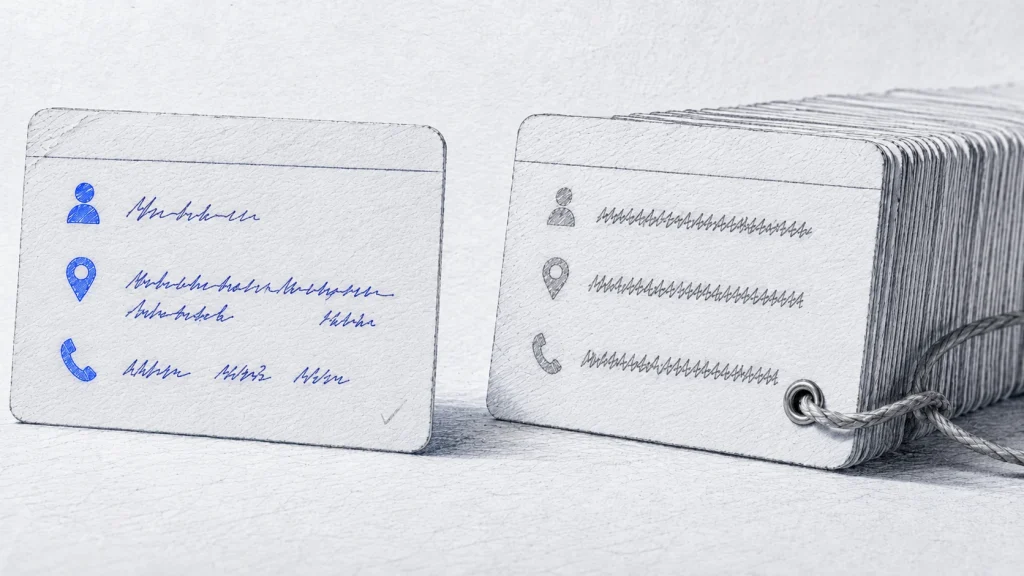
No, and the policy wording is where the answer sits rather than in anyone’s marketing.
Google’s link spam policy is about links created primarily to manipulate rankings. The qualifier is doing the work. A listing that exists so a customer can find your name, address and phone number is doing a different job: it holds a record of who you are and how to reach you. Whether it passes any ranking benefit is beside the point of why it exists.
Mass submission to sites nobody reads, sold on the promise of a link count, is a different activity that happens to share a word with the first one. If the pitch is “hundreds of backlinks”, the pitch is describing the thing the policy names. If the work is getting your details correct on the places customers actually check, it is not.
Worth adding: this update was not a link spam update. Google names those explicitly, with “link” in the title, and documents them separately because recovering from one works differently. This one was not named that way.
That is also why our own listing work is described as accuracy and correction rather than link count. It is the honest description of what the work does, and it happens to be the version that stays clear of the policy.
What Nobody Outside Google Knows

Plenty is being stated confidently about this update. Here is what is actually undisclosed:
- Which spam policies the update covered. Google did not say, at launch or at completion.
- Whether any particular detection system was changed.
- What share of searches moved.
- Whether local businesses were affected at all as a category. There is no evidence either way.
- Whether the volatility after 21 August was still this update, something else, or results settling.
- How long reassessment takes in practice.
Third-party tools can show that results moved. They cannot show why, and they cannot connect a movement on your site to a named update. That is a limit on the data, not a criticism of the people publishing it.
Takeaway: “Results moved” and “results moved because of this update” are different claims, and only the first one is observable from outside Google.
Working It Through: One Business in Late August
Ashcombe Roofing is a composite example, not a real client. It is a two-crew roofing firm whose owner noticed the phone was quieter through the second half of August and read that a Google update had rolled out in the same window.
What he checked first
He pulled his own call log for the previous August before opening anything else. Volume was down against July and almost identical to the same fortnight a year earlier. That took twenty minutes and removed most of the urgency.
What the site actually looked like
He had eleven town pages, built years earlier by someone who told him to have one per area. Nine were the same four paragraphs with the town name swapped. Two had real content about a job he had done there, with photographs. The footer carried a block listing thirty-one place names.
Nothing about that proves he was affected by anything. But reading Google’s doorway and keyword stuffing examples, he could see which parts of his own site the wording described. He merged the nine into one service-area page, kept the two real ones, and deleted the footer block.
What he found while he was in there
His Google Business Profile still carried a mobile number ported eighteen months earlier that now rang out. Two directory entries showed a suite number the firm had never used. One listing spelled his trading name wrong.
None of that had anything to do with an algorithm. All of it was costing him calls. He fixed the profile himself and ordered a citation cleanup for the entries he could not edit.
The part that did not resolve
Three weeks later one aggregator still showed the old number, with the support ticket open and unmoved. He noted it to re-check and stopped thinking about it.
Takeaway: The update was probably not his problem. Looking for it is what made him find the problems he did have.
What You Can Actually Check
All of this is verifiable by you, needs no tool, and is worth doing regardless of what any update did:
- Find the date your decline actually started. Compare against the same month last year, not against July.
- Call your own number from a phone that is not on your account, and confirm it rings the right place.
- Open your Google Business Profile logged out on a mobile and read it as a customer would.
- Look at your town pages side by side. If you cannot tell them apart with the place names covered, that is worth knowing.
- Check whether your footer or sidebar carries a list of place names doing nothing else.
- Search your business name in quotes, then any old phone number or address, and note what comes back wrong.
Google publishes its own guidance for working through a traffic drop, which is worth reading before acting on anyone else’s (debugging Search traffic drops).
One thing worth knowing about how these work: Google detects policy violations through automated systems and, where needed, human review that can lead to a manual action. An empty Manual Actions report therefore does not prove an automated system was not involved. It only proves nobody at Google reviewed your site by hand.
What Not To Do
Two reactions cause more damage than the update did.
The first is disavowing links. This was not a link spam update, so a link audit is the wrong first move, and disavowing a healthy profile is difficult to undo.
The second is cosmetic fixing. If nine town pages are near-identical, editing three of them changes nothing about the pattern. Google’s guidance on spam updates is to review the policies, correct what applies, and wait, and its own documentation describes systems relearning compliance “over a period of months”. That is conditional and it is slow. Anyone quoting you a recovery date is inventing it.
Frequently Asked Questions
Did the August 2026 spam update target local businesses?
There is no evidence either way. Google did not name any policies, industries or site types. Some spam policies do mention cities, regions and directories in their examples, which is why they are worth reading, but that is not the same as this update having targeted them.
Are my city or service-area pages a problem?
Having a page per area is not itself a problem. Google’s doorway example describes pages aimed at separate regions that funnel everyone to one destination. The test is whether each page would be useful to someone in that town, or whether it exists to catch the search.
Should I remove the list of towns from my footer?
Google’s keyword stuffing examples include blocks of text listing cities and regions a page is trying to rank for. If that block does nothing except name places, it matches the example. If your towns are covered somewhere a customer would actually read them, that is different.
Do citations or directory listings count as link spam?
Google’s link spam policy names low-quality directory links as one example, and the policy is about links created primarily to manipulate rankings. A listing that carries your correct name, address and phone number so customers can reach you is doing a different job. Mass placement on sites nobody reads, sold by link count, is the thing being described.
My rankings dropped in August. Where do I start?
Find the actual date. Search results moved several times in early August, before this update started, and Search Console had a reporting fault immediately before the rollout. If your decline began on 12 August, an update that started on 18 August is not the explanation.
How long does recovery take?
Google’s documentation says its systems may relearn compliance over a period of months, and that is conditional rather than promised. There is no review request for an automated spam update, and no published schedule.
Where This Leaves You
Google ran a routine spam update, it lasted under three days, and it applied everywhere. That is the news. For most local businesses the useful response is to read the three policies that mention cities and directories, look honestly at your own town pages and footer, and fix the contact details that were probably already wrong.
If that last part turns up more than you want to handle, Local Citation Services handles local citations submission and correction by hand as one-time work, from $5, with a two-tier guarantee: anything wrong gets fixed, redone or replaced free, and if it still is not right, you get your money back. If the profile itself needs sorting first, a Google Business Profile boost starts there instead.
And if you already ordered listings elsewhere and are waiting to see whether they went live, that wait is normal and has nothing to do with any of this. Directories process on their own schedules. Check the entries yourself rather than reading a report about them.

Founder, Local Citation Services and Local SEO Expert
Sharif has built local citations by hand since 2009, across 24,000+ orders and 50+ countries. He leads the team that submits every listing manually, checks what already exists before adding anything, and reports back with a live URL and a login for each one. He writes about what the work actually involves, what goes wrong, and what a business owner can check for themselves without buying a tool.